
The climate change has manifested in many ways in different regions depending on local regional and ecological conditions. It therefore, has distinguished social, ecological and economic impact. While poor people are the one who are frontline communities facing adversaries of climate crisis, their vulnerability is further depends on kind of occupation they have, nature of their interaction with resources, kind of houses they live and area where their habitat is located. This article is based on a lecture delivered by senior climate activists Mr. Saumya Dutta in an event organized by Rajiv Gandhi Institute for Contemporary Studies (RGICS) in Delhi on 27th February 2026. The original video of this lecture can be accessed from using this link- https://www.youtube.com/watch?v=7t0SJx5qJbM.
This article focuses on climate crisis in coastal regions of India and their impacts on coastal dwellers especially fisher communities. The article attempts to highlight the major changes that have happened already, and the changes that are going to happen based on scientific modelling studies, scientific projection and frame studies. These are all based on concrete data of what happened over the last 3-4 decades, and what are the projections based on different earth system changes that have been observed.
Changing Cyclone Pattern in Arabian Sea
One of the major climate crisis in the coastal region of India or I would say probably that is impacting most, is the change in cyclone patterns– the numbers, the intensity, and the duration of cyclone on both Arabian Sea and Bay of Bengal.
As we know that the Bay of Bengal was traditionally cyclone prone, but not the Arabian Sea, (Arab Sagar). In Arab Sagar, we did not have that many cyclones historically. Historically means, the meteorological record of the 130-140 years that we have, that IMD has or other institutions have. 30 years before, the rough estimate ratio of cyclone in both of these coast was 4 is to 1. That means if Indian coastline is hit by 5 cyclones in certain period, then 4 will originate in the Bay of Bengal and only 1 will originate in Arabian Sea. That was the rough estimate based on meteorological records of last 130-140 years. But in last few decades, that has changed dramatically.
So, the thing that has changed is in the Arabian Sea are the increase in cyclone numbers, their intensity, and the cyclone duration. All three have sharply increased. These changes in the pattern is attributed to factors responsible for cyclogenesis. Cyclogenesis is a process by which cyclone are formed and intensify in a particular atmosphere. Several changes have taken place in the western coasts due to changes in cyclone pattern. These changes are impacting the livelihood of coastal people, including coastal fish workers, coastal farmers, coastal population, small tourism industry and everyone.
See surface Temperature
One of the major factors responsible for cyclogenesis is sea surface temperature — the temperature of the water 50–100 metres above the seafloor. For cyclogenesis to occur, this temperature must be at least 26.5 degrees Celsius. Below that, the chance of cyclone formation is very low.
In the last few years — particularly from late 2022 onwards — sea surface temperatures around the world have broken all previous records. The old record was increasing very slowly, but around 2022, there was a sudden jump. Throughout the year, in the northern part of the Arabian Sea, the Bay of Bengal, and the Indian Ocean — collectively called the North Indian Ocean region — temperatures rose. Across the world, temperatures increased, but in the Arabian Sea, this warming happened even faster.
Wind Shear
The second change is what we call wind shear — how air moves at different heights. There has been a decrease in wind shear. Both of these changes are linked to climate change. The extra warming, or forcing, comes from the greenhouse gases we have accumulated over the last 150–200 years. A large part — about 40–50% — was absorbed by the sea and greenery, but the rest, around 50%, accumulated in the atmosphere. Every year, about 18–20 gigatonnes of carbon dioxide are added to the atmosphere. The more greenhouse gases accumulate, the more heat they capture — low-energy infrared radiation from the earth — and re-radiate it back toward the earth. This deteriorates the earth’s energy balance, increases temperatures, and the system tries to achieve a new balance. This is simple physics.
Due to this extra warming — the extra heat being captured — in the last decade, around 92% of that extra heat has gone into the sea. The sea has absorbed roughly 92% of the extra heat forcing, and only about 8% has been retained by the atmosphere. That 8% is what causes many of our problems on land.
In the sea, this change has been very rapid, and it is now reflected in global sea surface temperatures, breaking all records. This has created conditions for more cyclones, typhoons, hurricanes, tropical storms, and subtropical storms everywhere — not just in India or South Asia, but across the world. Because we are focusing on India, we will look at what is happening on our coasts.
Mid-tropospheric Humidity
The third factor is mid-tropospheric humidity. The troposphere is the lowest part of the atmosphere, where all weather phenomena occur and where we breathe. In the upper and lower parts of the troposphere, humidity is now very high because sea temperatures are high, and moisture pumping is increasing. When mid-tropospheric humidity increases, cyclogenesis and storm generation continue to increase.
Above mentioned conditions have increased very rapidly in some seas — the Arabian Sea being one of them. The number of cyclones and cyclogenesis has increased very fast. There is some debate about whether this increase over the last 17–18 years is 82% or nearly 100%. But even if it is 82%, that is an unprecedented increase. In 16 to 20 years, in a major weather or climate system, an increase of more than 80% has never happened in the world except during catastrophic events — like the asteroid hit 66 million years ago or the Toba super volcanic eruption 74,000 years ago, which almost eliminated humanity. Leaving aside such catastrophes, such a fast change does not happen in a big climate system. But this has been observed. This is not a conjecture or a projection. This has happened.
Sea level rise has dramatically increased. Before 2000 — from the 1960s to early 2000s — the rate of sea level rise was roughly 2.1–2.2 mm per year. In the last decade (and a little more), the rate is now more than 4.2 mm per year — it has doubled. Most impacts and relationships are non-linear. The rate of increase itself is increasing. This is very dangerous. Sea level is rising every year — a little bit of land goes underwater — but on top of that, the rate has increased. Next year, it will not be the same amount but an additional amount. When a cyclone or storm hits on top of a higher sea level, the storm surge will go further inland with salt water. Damages are being compounded.
Impacts of Coastal Climate Risks in India
As a result, our western coast — which was not traditionally cyclone-prone — is now facing new risks. If you go to the Bay of Bengal coast — Bangladesh, West Bengal, Odisha, Andhra Pradesh — you will find many cyclone shelters. People know what happens when a cyclone comes, where to go, and the layout of shelters (bottom for animals, upper floors for people). This knowledge is common in the eastern coast. But on the western coast, there is very little preparation for cyclones. Because cyclones were rare there, the mental and infrastructure preparedness is lacking. Only recently — in the last 8–9 years — have some preparations begun. Because west coast cyclones have increased so dramatically, the loss of lives, property, and livelihood has also increased dramatically.
To be fair, government action on cyclone disasters has improved dramatically since the 1999 Odisha cyclone. Radar networks (including Doppler radars), tracking and forecasting mechanisms and evacuation mechanisms are far better. During Amphan, over 10 lakh people were evacuated. Loss of life has been dramatically reduced. When people still die, a fair percentage die due to their own actions. The Government of India — particularly the Ministry of Earth Sciences and IMD — along with state governments, especially on the eastern coast, have improved cyclone forecasting, tracking, path prediction, warning systems in clear languages, and evacuation mechanisms. This is commendable.
However, even with warnings, you cannot move immovable properties. And moving movable properties inland safely requires infrastructure. For a fish worker family, the boat and net are lifelines. Since cyclones on both the Bay of Bengal and Arabian Sea coasts have increased dramatically — and will continue to increase — we need to build preparatory mechanisms. This includes quick removal of movable properties inland to safe areas. This can be done by collectives — village networks, panchayats — not just individual families. Panchayats today have planning authority and can include such inputs in their plans to save livelihoods and assets of fish worker families.
Economic Loss of Fish Workers
I have been working with fish workers’ unions — both large national unions — for more than a decade and a half. It is regularly reported that coastal fish workers do not have a 365-day working year. They have about 180–190 working days a year due to fishing bans, monsoons, etc. If there are 4 or 5 cyclone warnings in a year, and each warning keeps them from going to sea for 4–5 days, they lose 20–25 days of livelihood. That is a substantial part of their earnings.
Sometimes a cyclone warning is issued, but the cyclone or deep depression may weaken or end in the sea without making landfall. That can happen. But the disruption remains. When a cyclone warning is given, fish workers do not go to sea. If this happens 4–5 times a year, the loss of working days is significant. There is a clear demand from fish workers’ unions — based on climate justice principles — that fish workers are not responsible for this crisis. Their carbon footprint is negligible except for powered boats. Yet their livelihood, earnings, and properties are heavily impacted. The demand is that every lost day due to a cyclone warning should be compensated. This demand is strengthened because the National Disaster Management Act (2005) notifies cyclones as natural disasters. Losses from cyclones are eligible for disaster mechanisms. With proper documentation, there is a strong ground to demand compensation for livelihood loss due to cyclones.
Loss of Moveable Properties
The second major impact is loss of property. I will also come to loss of lives. During cyclones like Okhi (Kerala), Amphan, Yash, and western coast cyclones like Nishar, Taite, Taute, and Biparjai, there have been massive economic damages and loss of life. Loss of properties includes two kinds: movable and immovable. Movable properties — boats, nets — can be moved inland to some extent if there is warning and infrastructure. Immovable properties — a small house, a well, a plot of land — cannot be moved.
During COVID, in May 2020, Cyclone Amphan hit the eastern coast — West Bengal, northern Odisha, and parts of Bangladesh. It was the strongest cyclone to make landfall in India in many decades. The next year, Cyclone Yash made landfall from the Bay of Bengal. The India Meteorological Department (IMD) forecast that Yash would be much weaker, so losses might be less. But I noticed three factors converging that would make the storm surge much larger. I sent a warning to the NPSSFW and NFF groups that the storm surge would be very large, and that movable properties should be moved inland. After the cyclone hit, I received a call from someone in Bengal who said, “We were ruined.” When I asked why they hadn’t prepared despite the warning, they said: first, IMD said it would be weaker, and they had survived Amphan, so they thought they could survive this. Second, translating my warning into Bangla and Odia took time, and by then evacuation had already started.
Loss of Houses
I was working in the Sundarbans, in Pathar Pratima block, with a large group of women called Nari Jagaran Samities. In a meeting under a cyclone shelter in Dakshin Gangadharpur village, I asked 80 women from 80 different families: how many of you have faced major damage to your houses in the last 5 years? About 80% raised their hands. Many described what happened. A very large portion of families faced loss of their houses due to cyclones in the last 5 years.
There is a clear reason. The kinds of houses built in coastal areas — even in the cyclone-prone east coast — are not designed to resist high winds. There are three mechanisms through which a strong cyclone does damage:
- High-speed wind — the most highlighted. Wind speed (category 3, 4, 5; 150 km/h or more) around the eye of the cyclone causes damage.
- Storm surge— a wall of seawater carried by the wind. Water is 800 times denser than air. A storm surge can break concrete walls, whereas high-speed wind generally cannot. Storm surge damage is increasing.
- Heavy rainfall / downpour — just outside the eye region, there is very heavy rainfall.
All three damage mechanisms need to be assessed properly, and the kind of houses built in coastal regions must change. There is a need for awareness about which type of house can be built. For example, in coastal areas where cyclones are likely, you should not build a gable roof. Yet 80–90% of poor people’s houses have gable roofs because they cannot afford concrete roofing. I have pointed this out in many workshops and trainings with NFF, NFSW, and others, but not enough has changed. This is a very urgent need. People living in coastal areas — even if poor — must know that a gable roof is dangerous. There are other factors: overhangs, joints, using J-joints or U-joints instead of C-joints. But in coastal areas, even on the east coast, at least 80% of houses of people who cannot afford concrete roofs have gable roofs and other wrong constructions.
Awareness and Policy Advocacy
Organised fish workers’ unions should start an awareness and transformation campaign. Wherever possible in coastal regions, roofing should be modified. There will be more cyclones, with higher duration and intensity — a triple hit. Given the way climate change has impacted the earth system, for the next 50–60 years, there is no relief from continuously increasing impacts. These impacts will keep increasing, not decreasing or stabilising. Only if the whole world changes rapidly toward positive action will we see stabilisation after 40–50 years, and then possibly a reduction. But for the next 50 years at least, no visible reduction is projected. Miracles could happen — the world could decide to phase out all fossil fuels in 10 years — but not counting on that, we should prepare.
In one meeting in a school building, local masons and carpenters (about 12–13 of them) were listening. After the meeting, they came to me and said: “We know how to build a good home, but nobody told us what you said. Please hold a training session for us on what type of house should be made in this area to remain stable.” This is a major impact already happening, but we have not seen any response from governments. I suggest that larger-scale groups, unions — NFF, NFSA, Kisan unions in coastal areas — should pressurise the government. Under the Pradhan Mantri Awas Yojana, lakhs of houses are given grants (₹1.30–1.40 lakh). There is a provision that in vulnerable areas, the grant can be more. In cyclone-prone zones of India — 9 states and 4 union territories — all coastal areas have cyclone risks that have increased. Whenever PM Awas Yojana money is given, a clear guideline should be provided for what kind of house and roofing should be built. If an extra ₹30,000–40,000 is required for such changes, it should be provided. This can be achieved through pressure from large, organised groups with a political voice. Their political voice needs to be strengthened with scientific logic, argument, and evidence. I request coastal fish workers’ unions to do an assessment and evidence-building of how many people have lost how much in the last 10–15 years.
Loss of Other Assets
Non Engineered Infrastructure: Coastal infrastructure that is not engineered structures such as ponds, fields, dug wells, bore wells. In many coastal areas, dug wells and bore wells provide drinking water and irrigation water. These are often damaged by storm surges — not by high-speed wind but by storm surges bringing salty water inland, contaminating drinking water. Once contaminated, the only remedies are to drain the well and let 3 years of monsoon rain clean it, or to cover it. There are ways to tackle these problems, but they need to be understood. This has forced tens of thousands of rural people from Sundarban, Kendrapada district of Odisha, and other areas — and now in Kerala — to face severe challenges.
Coastal Erosion: According to Government of India estimates, 33.6% of India’s coast is facing accelerated erosion. Earlier data said India’s coastline was about 7,560 km; recently modified data says nearly 11,000 km because map contouring has changed — not that the coast itself changed, only the measurement method. Gujarat has the longest coastline. Around 26.8% of the coast is having accretion (more land being deposited). But if my village is eroded away, I will not be happy if a new village space is generated 500 or 1,000 km away. Coastal erosion has increased because climate change is driving stronger waves, wave erosion, and tidal erosion.
Coastal Salinity: I am a member of the Kanyakumari People’s Commission, and we have started a study on how much salinity ingress has happened, how many kilometres inland, and in which water sources. This is being done in Kanyakumari district of Tamil Nadu, but it is a problem across all of India’s coast. Some parts of Kerala are now facing lots of erosion — not only on the coast but also by the backwaters.
Inland Water Bodies and Impact on Inland Fish Workers:
Two things have been noticed globally and in India and South Asia. First, due to temperature increase, monsoon rainfall patterns have changed. Rainfall that was more distributed now falls more at the same time, with very long dry periods between rains. Evapotranspiration loss has increased a lot. When water falls, the soil, ponds, and rivers cannot store enough. During long hot, dry periods, evaporation loss — loss of soil moisture, pond moisture, river water — accelerates. Average annual flow and availability of fresh water is reducing. Some studies show 20–22% losses have already happened. In the Bhagirathi and Ganga, about 20–30% losses have occurred. In many rivers, ponds, and lakes, water loss is increasing. When the monsoon comes, they overflow; when it doesn’t, losses increase. Inland fish workers and fishermen face losses because of this.
Second, in the last 100 years, peninsular India and the sub-Himalayan part warmed a little less than the global average because of the sea on three sides. But this trend has changed in the last 10–15 years. The warming trend has increased. The Government of India’s Ministry of Earth Sciences reports, the IPCC Assessment Report 6, and other sources show this clearly. Actual changes are happening faster than predictions. The temperature of inland water bodies has increased a lot. When temperature increases, dissolved oxygen comes out of the water — because gas dissolution depends on temperature. This affects all life in the water: fish, plants, everything. If the dissolved oxygen level reduces, fish populations will decline. This trend is continuing.
Conclusion
There is a need to understand how these 5–6 mechanisms — sea level rise, coastal erosion, storm surge increase, cyclone damage through three mechanisms, and increased number of cyclones — interact. One good thing (though I don’t know if it is good) is that the number of cyclones in the Bay of Bengal has not gone up; some estimates show it has dropped by a small percentage. But unfortunately, the intensity of Bay of Bengal cyclones has gone up — because warmer sea surface waters make storms stronger. Storms are fuelled by moisture.
The rate of damage is increasing in different ways. Possible actions for larger groups, unions, and coastal communities include building preparatory mechanisms for movable properties, changing housing designs, and demanding compensation for livelihood loss. I will now quickly go into two points for inland fishing and inland fish workers.
(Original video was transcribed by Mr. Apurva Kumar and edited by Dr. Jeet Singh)
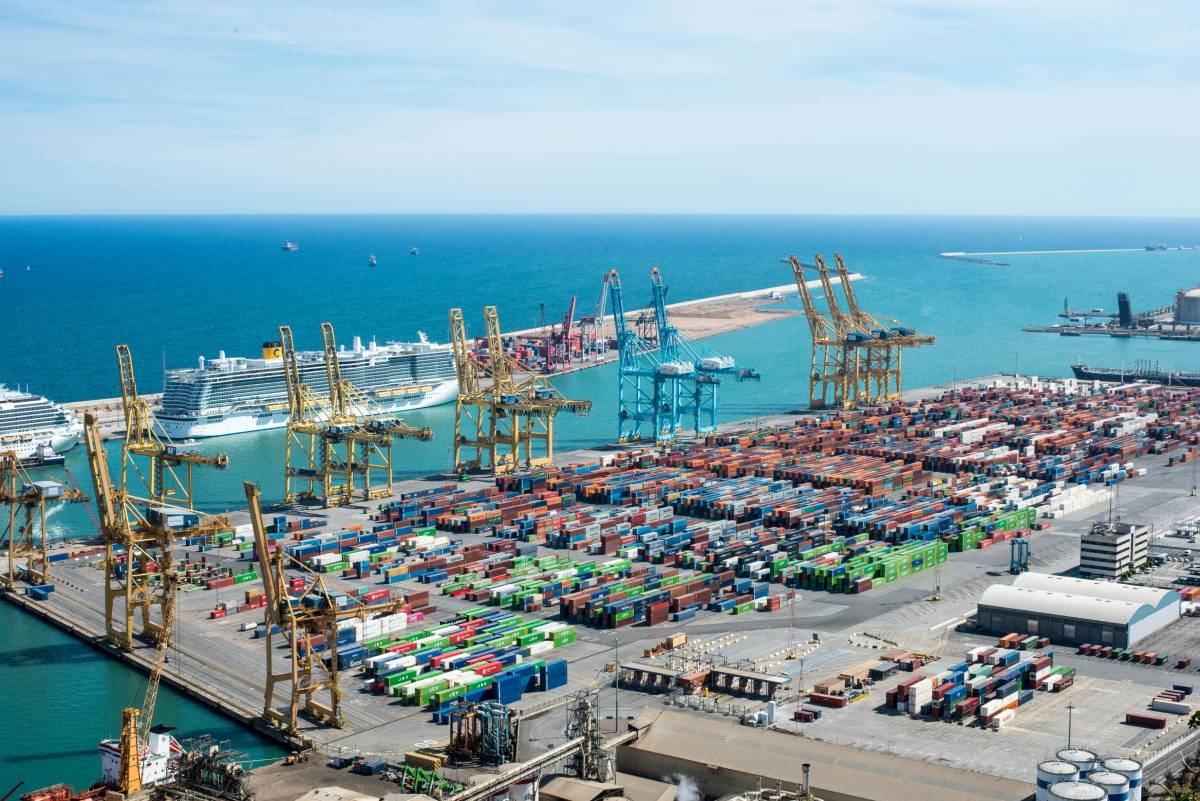
Photo by P Mantha on Unsplash