

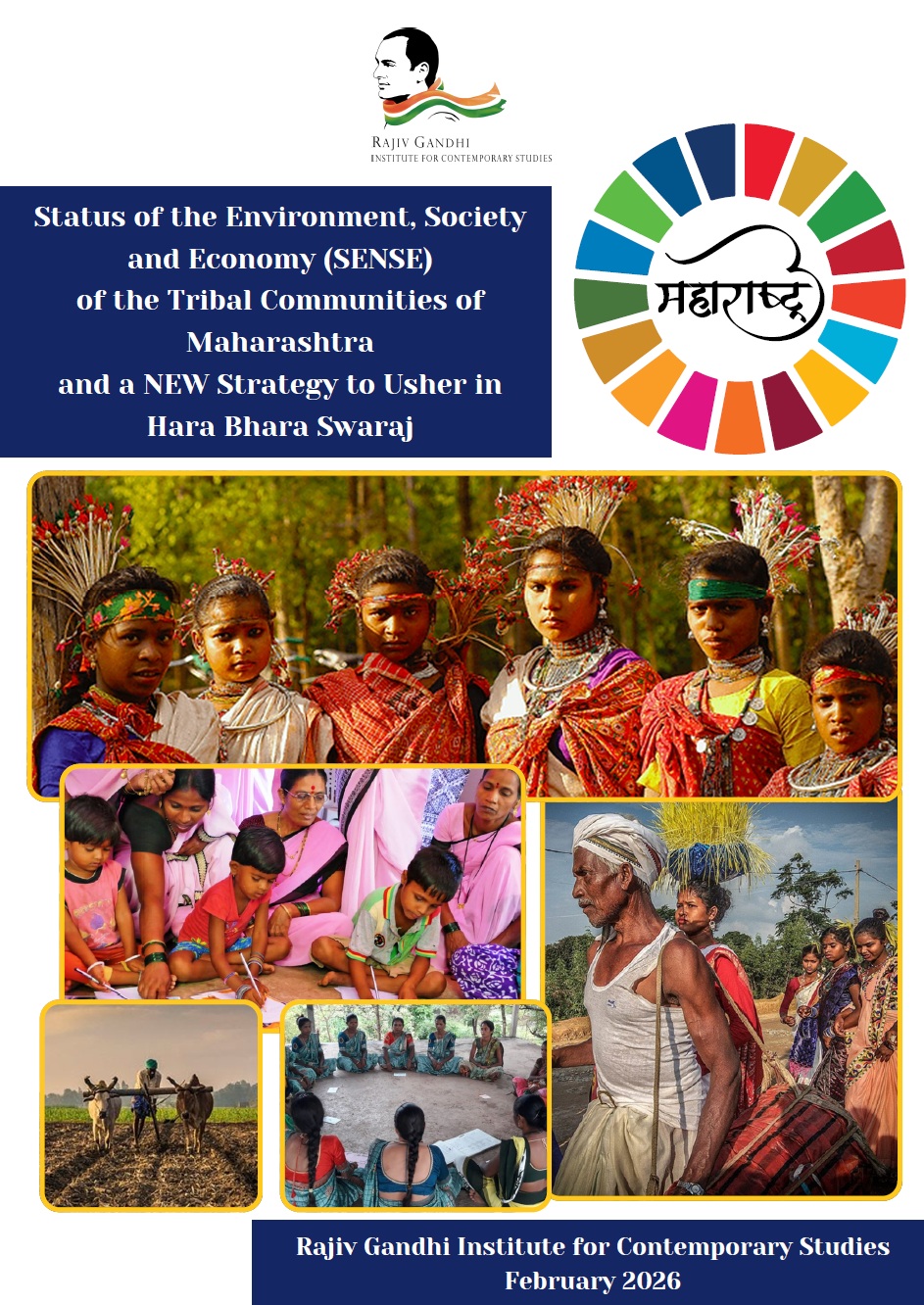
The Maharashtra SENSE Report assesses the Environment, Society and Economy of the state’s tribal communities and proposes a practical roadmap — the NEW Strategy — to usher in Hara Bhara Swaraj: a locally rooted, ecologically regenerative, and self-governing model of wellbeing. The study documents how intertwined environmental decline (water stress, forest degradation, land distress, climate variability), social shortfalls (learning losses, health burdens) and economic fragility (rain-fed agriculture, weak NTFP markets, migration) together produce chronic vulnerability across tribal belts.
Environmentally, tribal districts contain significant forest area but face qualitative decline: recorded forest tracts are being weakened by fragmentation, rising forest fires and pressures from mining and infrastructure; roughly 38% of villages in scheduled areas report seasonal water scarcity, undermining rain-fed livelihoods and NTFP incomes. The report records a worrying rise in forest fires (97 major incidents in 2025 vs 33 in the same period the previous year; Gadchiroli district alone witnessed 7,042 fire incidents between November 2023 and June 2024. These fires not only destroy vital forest resources but also disrupt the collection of Non-Timber Forest Products (NTFPs), which are crucial for tribal incomes. The loss of these resources exacerbates food insecurity and economic instability among tribal families.
Social and health outcomes lag: enrolment at primary levels is high but learning and retention drop at higher stages; nutrition and maternal-child health remain worse in tribal blocks; a 2025–26 sickle-cell screening identified ~9,700 new patients and ~82,000 new carriers, underscoring urgent public-health needs. Economic analysis shows small, rain-fed holdings, insecure tenure, and fragile NTFP value chains driving seasonal migration and precarious urban labour.
The NEW Strategy is the report’s integrated prescription. N — Nature Regeneration prioritises water-first interventions, forest and soil restoration, and fire-resilience through community stewardship. E — Enabling human, social and institutional development strengthens education, primary health, local governance and Gram Sabha capacities. W — Well-th Creation promotes community-oriented enterprises Tribal Entrepreneurship Mission (TEM) and value-added NTFP/agrarian enterprises that keep wealth local. Implemented together, these pillars aim for Hara (regreening) + Bhara (well-being) + Swaraj (self-governance) — collectively termed Hara Bhara Swaraj.
The report’s central policy message is clear: restore ecosystems, invest in people and catalyse community enterprises in tandem — only then will tribal Maharashtra shift from crisis to resilient, self-determined prosperity.
Keywords: Maharashtra SENSE Report; Hara Bhara Swaraj; NEW Strategy; Nature regeneration; Water security; Forest resilience; Forest fires; Non-Timber Forest Products (NTFP); Tribal Entrepreneurship Mission (TEM); Tribal health (sickle cell); Education & learning outcomes; Rain-fed agriculture; Tenure & land rights; Migration; Community entrepreneurship; Climate resilience.
Status of the Environment, Society and Economy (SENSE) of the Tribal Communities of Maharashtra and a NEW Strategy to Usher in Hara Bhara Swaraj
Send download link to: