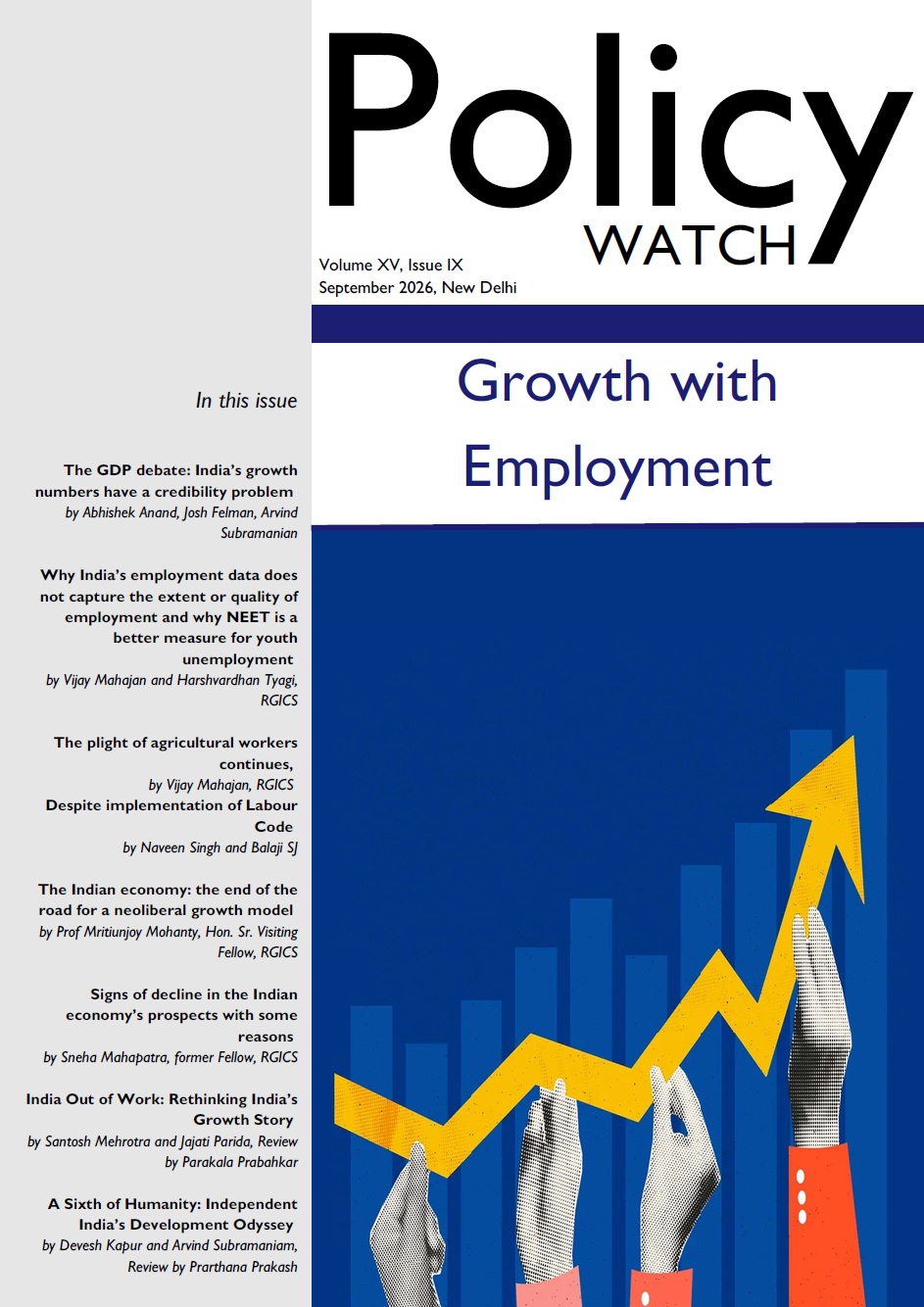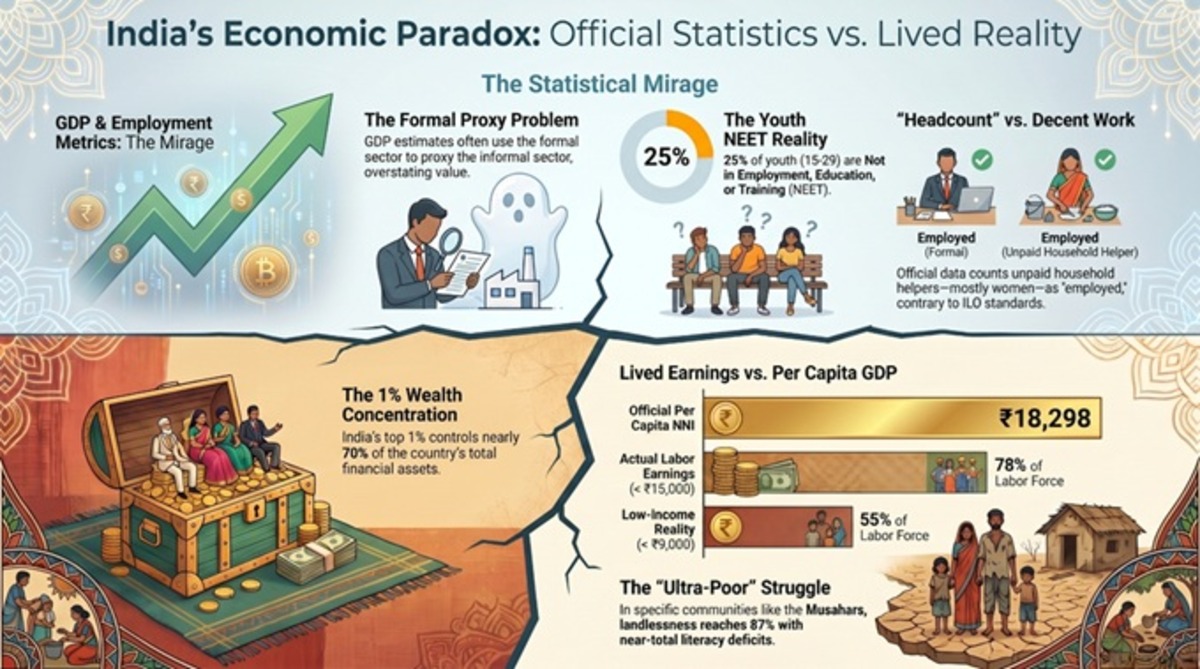
Urban employment in India is emerging as a major policy challenge amid rapid urbanisation, rising unemployment, and increasing livelihood insecurity. The article also points to limitations in existing statistical measures of urban employment. This often fail to fully capture informal work, underemployment, and the extent of livelihood insecurity.
A large share of the urban workforce—particularly informal workers, migrants, and socially disadvantaged groups such as Scheduled Castes (SC) and Scheduled Tribes (ST)—faces irregular incomes and a lack of job security. They also have limited access to social protection and basic services.
The article highlights that, unlike rural areas, urban India lacks a structured wage employment mechanism. In rural areas, programmes such as the Mahatma Gandhi National Rural Employment Guarantee Act (MGNREGA) provide a clear framework for wage employment. The absence of a similar system in urban areas leaves vulnerable populations exposed to economic shocks. As a result, many are forced into precarious work or distress-driven migration.
Urban unemployment in India is closely linked to broader structural issues.
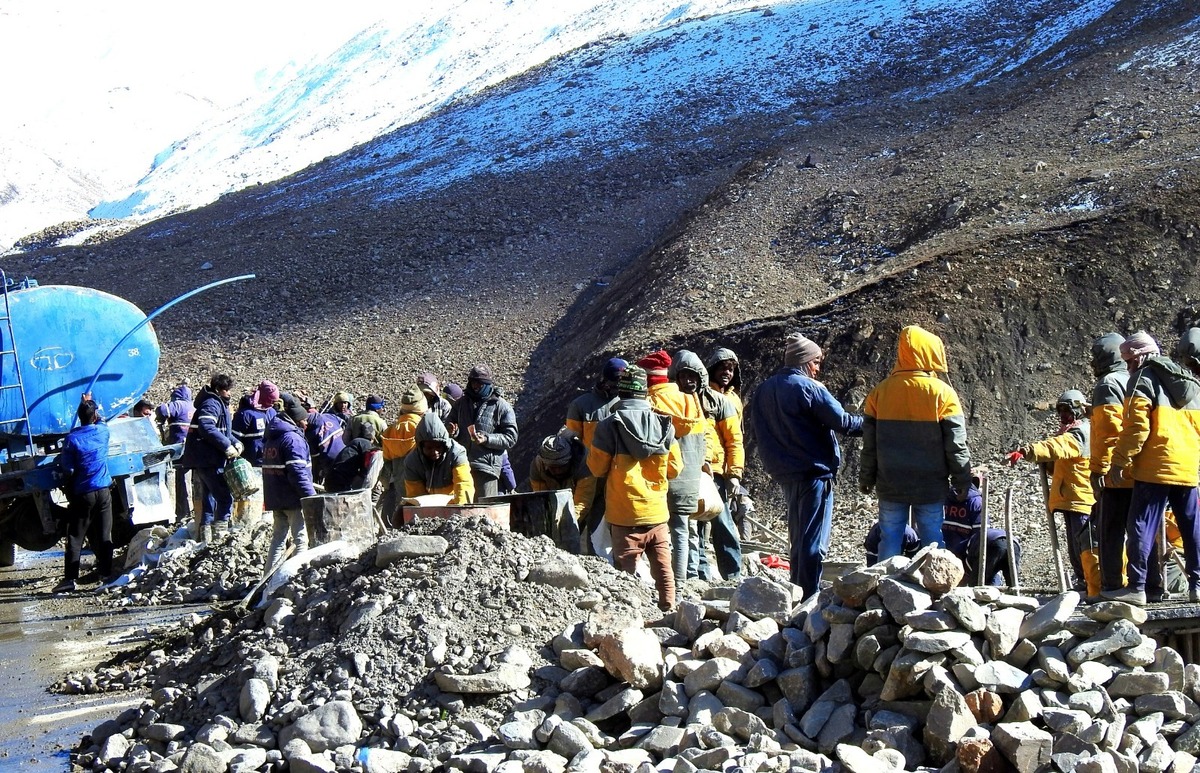
These include inequality, inadequate urban infrastructure, and weak institutional capacity. The study emphasises the need for a demand-driven approach to urban wage employment. Such an approach can generate jobs through public works, infrastructure creation, and community-based activities.
It further underlines the importance of decentralised planning, stronger institutional mechanisms, transparency, and effective monitoring to ensure that employment opportunities reach those most in need. However, key challenges such as financial constraints, limited administrative capacity, and coordination gaps across governance levels continue to affect implementation.
Overall, the article calls for a structured, inclusive, and scalable approach to urban employment in India. Such an approach aims to strengthen livelihoods, reduce vulnerability, and promote equitable and sustainable urban development.
Key Highlights
- Lack of a structured urban employment guarantee like MGNREGA
- High vulnerability among informal workers, migrants, and SC/ST communities
- Demand-driven wage employment through public works
- Focus on urban infrastructure and community asset creation
- Central role of Urban Local Bodies (ULBs)
- Need for transparency, accountability, and digital monitoring
Inclusion and Equity
The framework recognises structural inequalities in urban areas and prioritises support for:
- Informal workers
- Migrants
- SC/ST communities
It aims to ensure equitable access to employment opportunities.
Way Forward
A well-designed urban employment programme can strengthen livelihoods, reduce vulnerability, and contribute to inclusive urban development. Effective implementation will be crucial to achieving these outcomes.
Keywords
Urban employment India, urban unemployment India, urban wage employment, informal workers India, migrant workers urban India, SC ST urban livelihoods, livelihood insecurity India, urban poverty India, employment policy India, public works programme urban, MGNREGA comparison urban employment, urban labour market India, social protection urban India, inclusive urban development India, urban governance and employment.