

The trading of carbon credit certificates emerged as a globally significant tool to reduce emission and push a greener transition of our production and consumption in the last more than two decades. Many countries have fully developed Emission Trading System to cap their production emission and therefore meet global climate change targets. These ETS across countries have proved effective in reducing emission of green house gases; promote technological innovation and adoption of green technologies.
Moreover, the voluntary carbon market or offsetting of carbon emission across the globe has also developed as a robust mechanism that not only incentivizes non-obligatory production entities but also supports real ecological restoration programs and green economy. Started by Clean Development Mechanism commissioned as an output of UNFCCC Kyoto Protocol, this voluntary carbon market now has various variations and accreditation platforms. India has always been a constructive partner of UNFCCC to proactively commit and take appropriate action for reducing its emission. ‘As part of its first Nationally Determined Contributions (NDCs), India pledged to reduce the greenhouse gas (GHG) emission intensity of its economy by 33-35% by 2030 from 2005 levels. In August 2022, the Indian government revised its NDCs, raising its ambition to a 45% reduction in GHG emission intensity by 2030 from 2005 levels[1]’.
To further enhance its effort the government of India launched the Carbon Credit Trading Scheme (CCTS) on 28th June 2023. This scheme was designed to reduce greenhouse gas (GHG) emission through carbon pricing as is developed in various other countries. The CCTS has taken a comprehensive view and created provisions for setting target to obligated entities (high emitting industries), carbon offset and trading of carbon credit certificates.
The Compliance Mechanism:
The Government of India is introducing a mandatory compliance program for energy-intensive industries aimed at reducing greenhouse gas (GHG) emissions. Under this program, GHG emission intensity targets—measured as emissions per unit of output—will be set for identified entities, which will be classified as obligated entities. The Bureau of Energy Efficiency (BEE) will play a central role in identifying relevant industrial sectors, assessing their potential for emission reduction, and recommending inclusion in the Indian Carbon Market. The government has already issued a draft list of more than 200 energy intensive industries of India and set targets for them. This list will be finalized in the coming months.
BEE will recommend specific targets expressed in tons of carbon dioxide equivalent (tCO₂e) per unit of product, taking into account available technologies, implementation costs, and other relevant factors. Based on these recommendations, and after consultation with the National Steering Committee on Indian Carbon Market (NSCICM), the Ministry of Power will propose the targets to the Ministry of Environment, Forest, and Climate Change (MoEFCC) for official notification under the Environment Protection Act, 1986.
Obligated entities will need to meet the prescribed GHG intensity targets each compliance year. Entities that surpass their targets—reducing emissions below prescribed levels—will be eligible to receive Carbon Credit Certificates. Companies failing to meet targets must purchase or surrender certificates equivalent to their shortfall, creating a market-driven compliance mechanism.
The current Perform, Achieve, and Trade (PAT) Scheme, which focuses on energy efficiency, will be gradually transitioned into this new compliance mechanism under the Carbon Credit Trading Scheme (CCTS). This shift is designed to expand decarbonization opportunities beyond energy efficiency into direct emissions reduction.
Initially, nine sectors—Aluminium, Chlor-Alkali, Cement, Fertiliser, Iron & Steel, Pulp & Paper, Petrochemicals, Petroleum Refinery, and Textile—will be included in the transition. Additional sectors will be added progressively, further broadening the scope of the program and supporting India’s long-term climate goals through structured emission reduction, incentive-driven compliance, and expansion of the domestic carbon market.
The Offset Mechanism:
The Offset Mechanism is a voluntary, project-based baseline and credit system designed for non-obligated entities. It allows these entities to register projects that achieve greenhouse gas (GHG) emission reduction, removal, or avoidance compared to a defined baseline, in return for Carbon Credit Certificates (CCCs). This mechanism broadens India’s emission mitigation efforts by targeting sectors outside the mandatory compliance mechanism, thereby incentivizing climate-positive actions in a wider range of industries.
Projects under the Offset Mechanism must meet eligibility requirements detailed in procedures published by the Bureau of Energy Efficiency (BEE), based on recommendations from the National Steering Committee on Indian Carbon Market (NSCICM). Each project will follow an established project cycle, encompassing multiple stages—from initial registration and validation to monitoring, verification, and final certification—before CCCs can be issued. In March 2025 the NSCICM has issued detailed guideline for project cycle for projects to be taken up under the offset mechanism[2].
The approval process will ensure that projects are aligned with nationally defined standards and can deliver credible, measurable, and additional GHG reductions. Through the issuance of tradable credits, this mechanism provides financial incentives for voluntary climate action, encouraging entities to go beyond regulatory requirements.
List of Approved Sectors in Offset Mechanism under CCTS
| S. No | Sector | Sub-Sector | Illustrative Technologies |
| Phase – 1 | |||
| 1 | Energy | – Energy Industries (renewable / non-renewable) – Energy distribution & – Energy demand |
– Green Hydrogen production through electrolysis – RE with Storage – Offshore Wind – Green Hydrogen production through Biomass – Compressed Biogas – Energy efficiency improvements of a lime production facility through installation of new kilns |
| 2 | Industries | – Manufacturing Industries – Chemical Industries – Mining/Mineral production & – Metal production |
– Green Ammonia usage – Feed switch in integrated Ammonia-urea manufacturing industry |
| 3 | Waste handling and disposal | – Waste handling and disposal | – Biochar – Landfill Gas Capture |
| 4 | Agriculture | – Agriculture | – Systematic Rice Intensification – Biochar – Agroforestry |
| 5 | Forestry | – Afforestation and reforestation | – Afforestation activity – Institutional Forestry |
| 6 | Transport | – Transport | – Modal Shift
– Electric vehicle/bus |
| Phase-2 | |||
| 7 | Construction | Construction | Limestone Calcined Clay Cement (LC3) |
| 8 | Fugitive Emissions | – From fuels (solid, oil, and gas) – From Industrial gases (halocarbons and sulphur hexafluoride) |
– CF4 emission reduction in semiconductor manufacturing facility – Recovery and utilization of gas from oil fields |
| 9 | Solvent use | Solvents use | |
| 10 | CCUS | Carbon capture, utilisation and storage of CO₂ and other removals | Post combustion – CCS |
In September 2024, the BEE had approved 10 different sectors for the offset mechanism under two phases. The first phase covers projects under sectors such as energy, industries, agriculture, waste handling & disposal, forestry and transport. In the second phase the mechanism will be expanded to sectors such as fugitive emissions, construction, solvent use and carbon capture, utilization and storage of CO2 and other removal. In 2025, the BEE has already started accepting applications from non obligated entities to register under the offset mechanism.
Many projects can be taken up under the approved sector for the offset mechanism of CCTS. Some technologies or tools include Green Hydrogen Production, offshore wind and compressed biogas. Under the sector waste handling and disposal technologies such as Biochar and Landfill gas capture can be taken up. Agriculture and forestry are two other important sectors which have great potential to capture and sequestrate carbon emission. The BEE has indicated that projects around technologies such as SRI, Biochar, Agro-forestry, institutional forestry and afforestation activities can be taken up[3].
While the BEE has approved sectors and indicative technologies and tools for offset projects, it has a huge task ahead to formally start this as a functional mechanism. One is that it needs to develop a functional registry where projects will be registered and two it needs to develop methodology and tools for each of the technologies under various sectors and sub sectors. So far the BEE has approved methodologies for nine sub-sectors which includes following[4]:
- Grid-connected electricity generation from renewable sources
- Hydrogen production from electrolysis of water
- Energy efficiency and fuel switching measures for industrial facilities
- Hydrogen production using methane extracted from biogas
- Landfill methane recovery
- Flaring or use of landfill gas
- Methane recovery from livestock and manure management at households and small farms
- Afforestation and reforestation of degraded mangrove habitats
- Afforestation and reforestation of lands except wetlands
While the BEE has started accepting applications for registration of entities interested in offset mechanisms to promote voluntary carbon markets in India, it still lacks a comprehensive mechanism to register projects and decide on project cycles under each theme.
Offset Mechanism of CCTS, Nature Regeneration and Incentive to Communities:
The offset mechanism of CCTS is in the line of voluntary carbon markets such as Clean Development Mechanism (CDM), Gold Standard and Verified Carbon Standards (also known as VERRA). Indian carbon credit trading scheme is one among very few ETS (emission trading system) that accommodate trading of both compliance and voluntary carbon credits. Government regulated voluntary carbon trading is also practiced in countries like Japan, Australia and South Korea.
The experiences of the voluntary carbon market that has globally developed in the last couple of decades has proved that there is huge scope of innovation and effective implementation of nature based solutions and regeneration of natural wealth. The CDM alone has registered 7830 projects from across the globe. Indian enterprises have the highest number of projects registered with CDM. VERRA registry which started much later has also registered 2528 projects and issued 13474 lakh carbon credits of which 8507 lakh carbon credits have already been retired. Indian projects dominate here as well. According to the VERRA registry, there are a total 707 projects registered in India focusing on energy, reforestation, agriculture innovation, plastic, waste recycling and regeneration of natural resources. Similarly the gold standard has also a list of 4044 registered projects which have cumulatively reduced and removed 407 million tones of CO2 eq.
According to the 2011 census millions of villages in India are located in forest areas and their substance life is heavily dependent on forest, forest products and ecosystem services offered by these forests. Regeneration of natural resources such as water, forest, land and soil will directly support their livelihoods and subsistence life. Moreover, the carbon market mechanism offered by CCTS will additionally incentivize poor rural people engaged in restoration of natural resources.
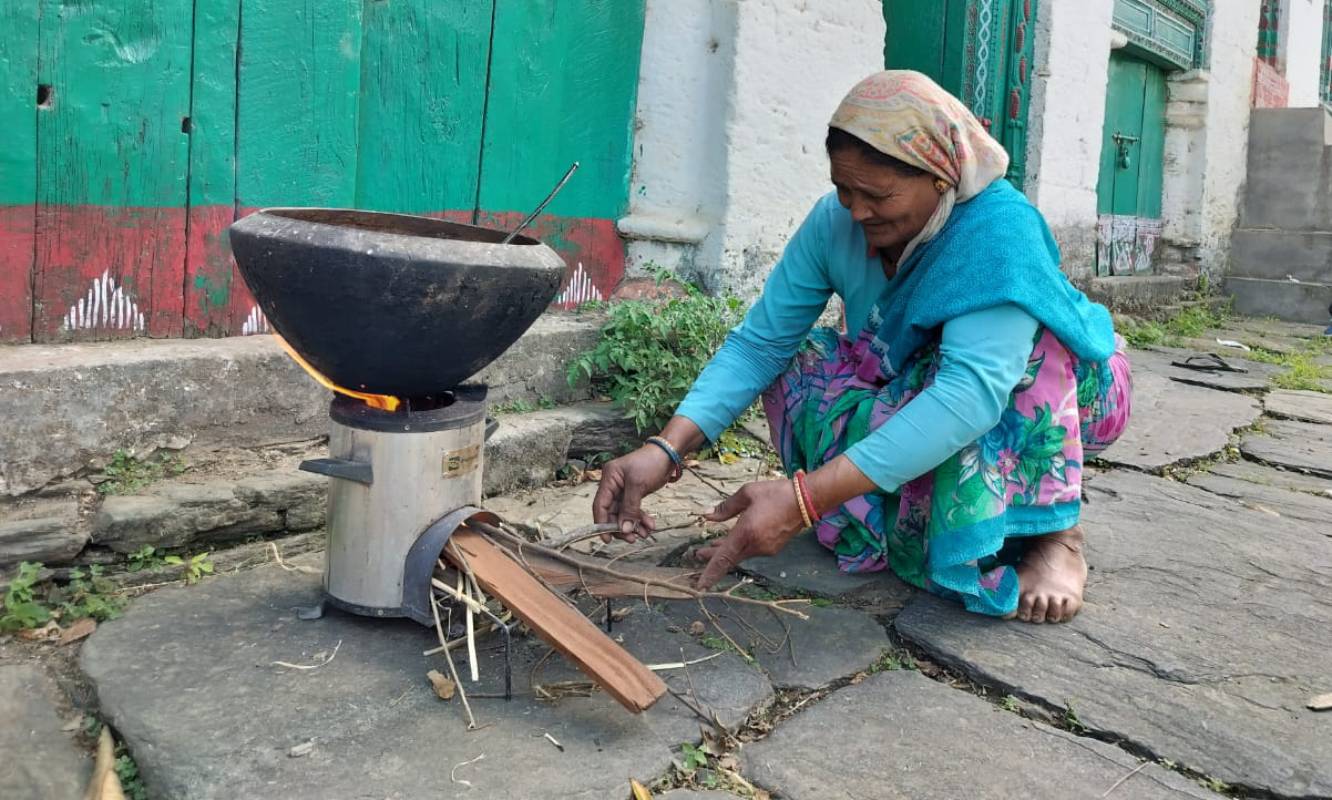
There are hundreds of projects from India registered under international voluntary carbon mechanisms such as CDM, VERRA and gold standards. Many of these projects are in very advanced stages where poor people have started receiving dividends of their investment in projects like agro forestry, biogas and improved cook stoves. The roll out of CCTS if implemented well and created a dynamic institutional framework, such a project will not only increase but also greatly incentivize local communities for their conservation and restoration efforts. The effective rollout of the offset mechanism of CCTS will promote Indian non-compliance entities to enroll for such projects. In this article we give you few examples of ongoing pro-poor climate change project of India.
Agro Forestry Project of Coolie Sangha
The Agricultural Development and Training Society (ADATS) in Bagepalli (Karnataka) has been working with farm laborers and marginal farmers for the last 47 years. They have organized this marginalized section of society and are working towards their social and economic empowerment. In this region, ADATS is working in 1257 villages with a total population of 1.47 lakh. The target group of ADATS has been organized as Coolie Sangha Units (CSUs) at village level. Currently, all CSUs have cumulatively 9,958 active members. These CSUs are further federated under the umbrella organization called Bagepalli Coolie Sangha (BCS). The BCS comprises 43% of women and 57% men.
Nearly 29 years ago the ADATS shifted its focus from a mere rights based organization to an organization that addresses livelihood concerns along with civil and political rights of coolies. Being a very dry district, Bagepalli and its surrounding is not good for traditional agriculture. Mostly people harvest one crop in a year due to lack of water. With the changing climate, conditions of this region are gradually becoming even more difficult for subsistence life.
To address issues of changing climate and deteriorating livelihoods of coolies, ADATS in the late nineties started working on climate resilient livelihood promotion for coolies. The first such project of ADATS was ‘Act Implement Jointly’ (AIJ), a project commissioned by the Department of Energy (Govt of USA). After the commencement of Clean Development Mechanism (CDM) of UNFCC in the 2005, the ADATS started working on pro-poor climate change projects.
In these projects ADATS has been motivating small farmers to plant trees and also move to clean cooking energy such as biogas. With the help of CDM, Gold Standard regulations and interested pro-poor investors the organization has improved livelihoods of thousands of coolies in the region. In total, the organization has helped 23,957 families to plant fruit trees as part of agroforestry projects.
The organization through these projects has generated thousands of tons of carbon credit and traded in the market. The gain from trade of carbon credits has been distributed amongst beneficiary families. ADATS has in these 29 years created a credible, robust and efficient ecosystem to handle such projects by creating institutions like Fair Climate Network, Fair Climate Services Pvt Ltd and network of implementing agencies.
This project is highly decentralized and controlled by a community group called coolie sanghas. ATADS has organized people in every village under the organization called Coolie Sangaha (also known as CSUs). CSUs conduct their meetings on a weekly basis to plan and monitor their programs. In case of failure of any project, these meetings act as collective reviewers.
These CSUs have also been instrumental in planning, implementing and collectively monitoring climate change projects. For example, these units assess capability and feasibility of any member to enroll in an agroforestry project under the climate change program. Collectively, members of CSUs assess the availability of land and access to water for agroforestry. They also informed that the CSU meetings also function as a collective motivator and observer of projects executed by its members.
The Bagepalli Coolie Sangha (BCS) and Coolie Sangha Units (CSUs) have also been instrumental in distributing benefits of CER generated by each and every participating family in climate change projects implemented by ADATS. The money earned after sale of CER are credited in accounts of CSUs, which ensures its distribution.
Bio Gas Project in Jim Corbett Landscape:
Jim Corbett National Park is a globally known tiger reserve located in Uttarakhand and established in 1936. It is the place from where the project Tiger was launched in 1973 by the government of India to protect tigers. However, People around these forests are still dependent on it for their daily needs such as fuel and fodder. These dependencies of local people are seen as biotic interference disturbing tigers by the park administration.
As the forestation and reforestation methodology adopted for offset mechanism under CCTS, the above ground biomass in forests is greatest carbon pool for accounting of carbon stock[5]. The heavy dependency of forest dwelling communities on forests for fuel and fodder reduces this pool in a significant way. The decrease in such dependency will make forests more capable of carbon sequestration.
To reduce dependency of people on Jim Corbett forests for fuel, SUVIDHA a local NGO based in Haldwani (Uttarakhand) in 2016-17 started a biogas project in 134 villages round the forests in Nainital district. In collaboration with Fair Climate Network they constructed 2800 bio gas in these villages. Interestingly, the project is not limited to reducing forest dependency and providing a clean cooking system but SUVIDHA has also registered it in the voluntary carbon market to generate carbon credits to be encashed by poor households using the biogas.
Implementation of such a project is not easy, it requires a lot of community level trust building and behavior change. In this case the major hurdles faced by SUVIDHA were to change their routine of using fuel wood to biogas. Moreover, there was apprehension and miss information about biogas at the village level. It took community level workers of SUVIDHA many months to convince a few people initially. However, on successfully demonstrating some units of bio-gas, the project picked a good speed and they constructed 2800 bio gas plants in that area.
This project has yielded many co-benefits which include reduction in biotic interference in Jim Corbett national park, a clean and affordable fuel to poor rural households, improvement in above-ground biomass in the forests and additional payment for bio-gas users for generating carbon emission certificates. To be able to authentically generate CER the actual task begins after construction of biogas. A regular monitoring which is transparent, locally monitored and proper documentation are crucial to satisfy evaluators who recommend issuance of CER. SUVIDHA with the help of the Fair climate Network has developed these skills and capabilities and is now able to transfer benefits to community members on a regular basis.
According to the Fair Climate Network, typically, a domestic biogas digester generates 2.7 to 3.5 tCO2-e per unit per annum. At € 20 per CER and an exchange rate of ₹ 80 this translates to a carbon revenue of ₹ 4,320 to ₹ 5,600 per unit each year of the 21 year long crediting period. This project has undergone two third-party Verifications by UNFCCC accredited carbon auditors. 38,745 GS VERs have been issued and retired on behalf of IndiGo passengers, clearing 53% of the ERPA.
International Experiences and Indian Carbon Market
The Indian Carbon Market is still taking shape; however, it has been participating in international carbon offset projects since beginning. The highest number of projects registered with CDM from India indicates that we have been using these platforms as they started taking shape. Yet, we do not have any organized system to make use of these international carbon offset mechanisms including CDM, VERRA and gold standards. Most of these projects are direct connections between Indian project developers and offset mechanisms. This system makes the entire carbon market opaque, non-transparent, slow and very expensive.
Because of these difficulties the carbon pricing per CER is also relative. For example Arohi Society – an Uttarakhand based NGO registered its carbon project with VERRA in Uttarakhand is expecting 18-20 USD per CER; however, CEO of Agrinet Foods and Beverages Mr. Ronald Castellino is expecting USD 50 and above for per CER generated by his company. This gross difference in price of CER is due to the non-transparent mechanism and highly centralized system.
Entering in the carbon market is also difficult as its input cost which includes preparing base line data, field level actions, project development and registration is very high. All these also require costly software and professionals to make project proposals. All this cannot be done without any capital investment. It therefore a committed pro-poor experts started a network called ‘Fair Climate Network’ to support grassroots NGOs and civil society groups to hand hold in staring pro-poor carbon projects. However, more such initiatives are required so that resources and knowledge can be shared for effective implementation and asserting voices of the poor in the carbon finance market.
Registered Nature Regeneration Carbon Projects
| Registry | Total registered projects | Total Indian Project Registered | Registered Indian Projects for Regeneration of Nature |
| CDM | 7830 | 1767 | 19 |
| VERRA | 1495 | 393 | 130 |
| Total | 9325 | 2160 | 149 |
Source: Compiled from CDM and VERRA Registry (as on 10 September 2025)
Projects relating to regeneration of common properties such as land, water and forest directly and indirectly benefit poor people in rural areas. However, implementation of these projects is also very difficult. Therefore, under CDM and VERRA only 149 out of 2160 Indian carbon projects are registered to regenerate natural capitals. To attract more project developers in this sector the VERRA has created separate standards called Climate, Community and Biodiversity Standards (CCBS). These standards are designed for supporting land use projects in addressing climate change, benefitting local communities and smallholders, and conserving biodiversity. These standards were released in May 2005 for the first time, yet the VERRA has only 75 verified projects under this theme across the globe.
The Carbon Credit Trading System (CCTS) which is in its early stage must address these challenges so that both nature and its stewards (communities) can benefit from carbon finance. The good thing is that it has taken a comprehensive view and attempted to develop systems both for compliance and voluntary mechanisms. The voluntary mechanism has great potential to develop our domestic carbon market and help its own citizens. Moreover, it has an obligation to make this market transparent and accountable so that benefits reach the common people.
CCTS is also important for India, as from 2026 onwards the European Union will start levying taxes on goods imported from India and elsewhere under its Carbon Border Adjustment Mechanism (CBAM). The rollout of CBAM is going to affect our export to European countries. There is a high possibility that our exports such as cement and aluminum will be non-competent in the European market due to high tariffs under CBAM. The rollout of CCTS is a good step in order to reduce export risks due to CBAM, however we are running late and our system is not fully in place. The challenges are to immediately put in place a good mechanism both for compliance and offset mechanism under CCTS.
Role of CSOs in Pro-Poor Carbon Projects:
Analysis of the CDM and VERRA registry shown in the above section reveals that the global carbon finance market is still very concentrated and catering to its sophisticated and organized clients. Most projects registered in these two registries are capital intensive projects on energy and technologies started by wealth industrialists. The market has not reached to poor people who are most vulnerable to the risks of climate change and global warming. In India, less than 7% of total registered projects with CDM and VERRA are in the sector of regeneration of natural resource such as land, water, forests and soil. Furthermore, VERRA registry data reveals that of total 1495 registered project across the globe only 108 projects are verified and validated under Climate, Community and Biodiversity Standards (CCBS).
Such disproportionate distribution of carbon finance projects across the globe indicates towards its complex nature, opaque systems and unaffordable prices. The VERRA charges around 8,000 USD per project to register and validate. Moreover another 5000 to 10000 USD are required to pay as annual fee for verification and validation body[6]. In addition to this the Fair Climate Network based in Bagepalli (Karnataka) expects its partners interested in agro forestry projects to invest something between 20 to 40 lakh to do baseline activities before getting the project registered.
Largely industry people having investment capital are not interested and they do not have capacity and skill to organize community members in large numbers to register a project that benefits poor people. Civil Society Organizations (CBOs) have the skill and orientation to work with the community but they do not have access to initial investment to register a project. Therefore, the Fair Climate Network in India looks for an investor who is willing to purchase CER upfront. Through this process FCN has been able to register many projects across the country through its partner CSOs.
A pro-poor carbon project requires organized mobilization of several people with small land holding or villagers dependent on any common property resources. Such mobilization and long term collective action by members of communities requires social and institutional processes. At times these processes or social interventions require action for behavior change. For example, in the case of a bio-gas project, it requires a lot of effort to convince people to shift from their traditional practices to bio-gas. CSOs in India have been doing such social intervention for a number of projects. They already have connections in their target communities. Moreover, there is trust between community members and local CSOs. To make carbon projects successful for community led regeneration of nature, the CCTS must develop a system to utilize capacities of Indian CSOs.
The offset mechanism of CCTS must take these hurdles in consideration in order to involve community members in the fight against climate change. This mechanism can be instrumental social and economic resilience of disadvantaged communities along with overall ecological resilience. India has a rich tradition of CSOs and they have been working directly with communities. Their skill, capability and motivation can be channelized to make the offset mechanism a success. We need to learn from existing mechanisms to make our indigenous mechanism more transparent, inclusive, accountable and affordable.
Conclusion:
The Carbon Credit Trading Scheme (CCTS) of India is a long awaited policy document that was issued in 2023. By incorporating both compliance and voluntary carbon mechanisms, the CCTS has attempted to comprehensively envision India’s strategy to reduce its emission. The CCTS will broaden the base of India’s fight against climate change and its attempt to achieve social, economic and ecological resilience. No doubt, effective implementation of CCTS will substantially contribute in achieving the target of net zero by 2070 and Nationally Determined Commitments (NDCs) by 2030.
However, its actual roll out has been delayed. A new report of Financial Express notes that the government is all set to roll out a compliance mechanism for over 280 most emitting industries in the sector of aluminum, cement and pulp & paper. According to the report CCTS will be extended soon to more industries from other sector[7]. However, it has not operationalized the offset mechanism so far.
The offset mechanism has the potential to innovate a number of climate change projects. More importantly this mechanism can be used to regenerate our degrading natural resources such as water, forest, land and soil. It can also be used to enhance agricultural productivity of small and medium farmers. Forest dwelling communities can be incentivized for protection and conservation of their common resources. Existing examples of projects registered with CDM and VERRA are there to learn lessons and build our indigenous system which reflect society, culture, economy and ecology of India. A latest RGICS study – Status of ENvironment, Society and Economy (SENSE) estimate that in next five year period Uttarakhand has potential to generate Rs. 5,354 crore per year from climate finance and sale of generated carbon credits[8]. Similarly Himachal Pradesh has potential of generating Rs. 1381 crore[9], Nagaland can generate Rs. 583 crore[10] and Mizoram[11] can generate Rs. 802 crore per annum.
Global experiences suggest that not much has been done to make climate vulnerable communities part of the carbon project. The CCTS has an opportunity to develop a system which makes this entire carbon market more decentralized, inclusive and transparent so that people can collectively fight against climate change and secure resilience.
References:
[1] https://beeindia.gov.in/carbon-market.php
[2] https://beeindia.gov.in/sites/default/files/Detailed_Proceedure_for_Offset_Mechanism_under_CCTS.pdf
[3] https://beeindia.gov.in/sites/default/files/2024-10/OM%20for%20approved%20Sectors%20in%20Offset%20Mechanism%20under%20CCTS.PDF
[4] https://beeindia.gov.in/methodologies_and_tools_under_offset_mechanism.php
[5] https://beeindia.gov.in/sites/default/files/BM_FR05.002_Afforestation_and_reforestation_of_lands_except_wetlands.pdf
[6] https://verra.org/wp-content/uploads/2024/01/CCB-Standards-Fee-Schedule-v3.6.pdf
[7] https://www.business-standard.com/economy/news/india-gears-up-to-embrace-carbon-market-plans-to-counter-climate-criticism-125092900008_1.html
[8] https://www.rgics.org/a-new-strategy-for-inclusive-and-sustainable-development-of-uttarakhand/
[9] https://www.rgics.org/an-analysis-of-the-current-status-of-the-environment-society-and-economy-of-himachal-pradesh/
[10] https://www.rgics.org/an-analysis-of-the-current-status-of-the-environment-society-and-economy-of-nagaland-and-a-new-strategy-for-inclusive-and-sustainable-development-of-nagaland/
[11] https://www.rgics.org/an-analysis-of-the-current-status-of-the-environment-society-and-economy-of-mizoram/